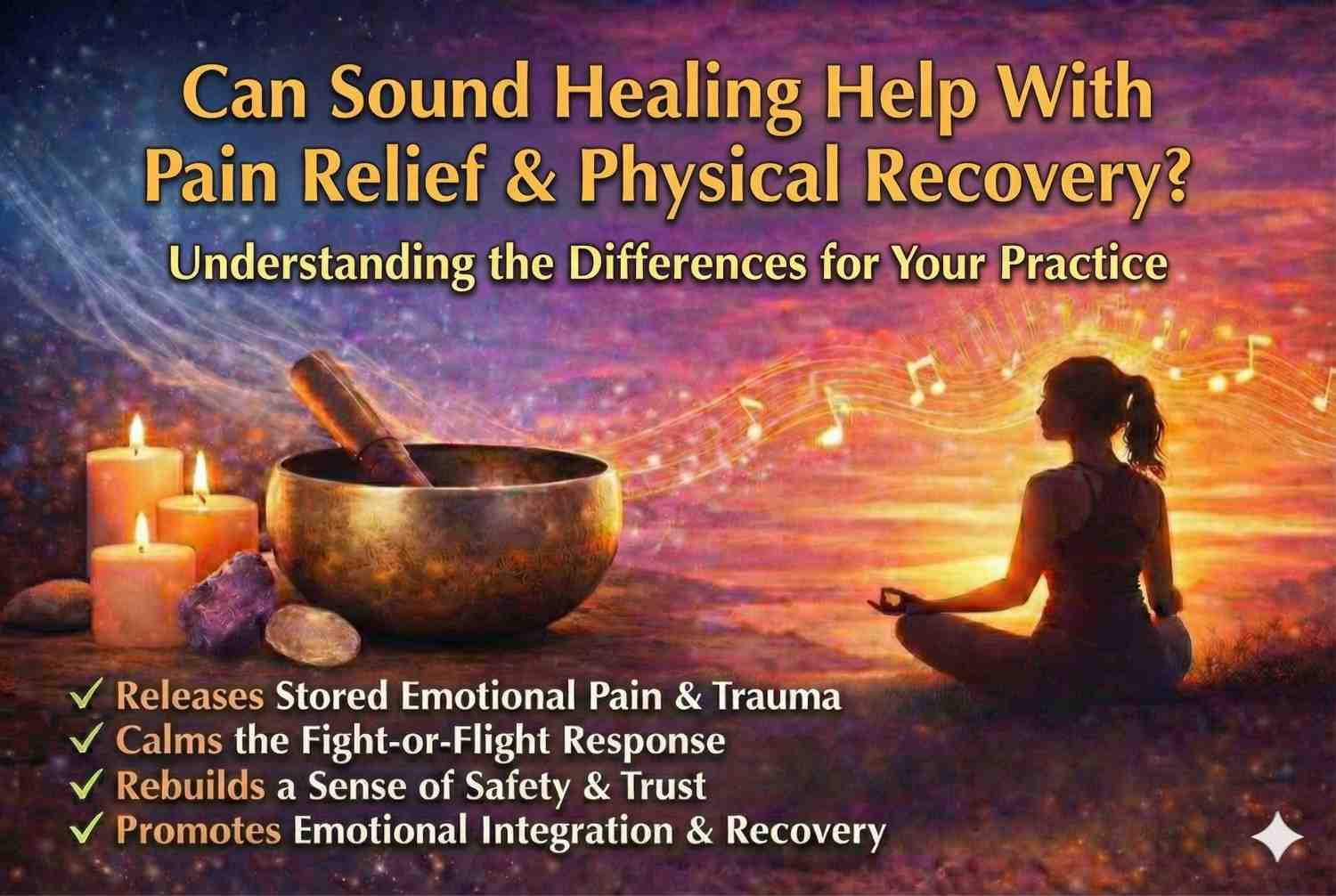
A Complete Evidence-Informed Guide to Vibrational Therapy for Natural Healing
Chronic pain, muscle tension, and slow physical recovery affect millions of people worldwide. As interest grows in non-invasive, drug-free wellness options, many are asking:
Can sound healing actually help reduce pain and support recovery?
In this we’ll explore:
-
How pain works in the body
-
What sound healing is
-
The science behind sound & the nervous system
-
Potential benefits for pain relief
-
Recovery support for injuries & fatigue
Understanding Pain: Why It Happens
Pain is not just physical — it’s neurological.
When tissues are injured or inflamed:
-
Pain receptors send signals to the brain
-
The nervous system amplifies or dampens those signals
-
Stress and anxiety can increase pain perception
This means pain relief isn’t only about the injured area — it’s also about calming the nervous system.
That’s where Sound Healing may help.
What Is Sound Healing Therapy?
Sound Healing uses specific tones, frequencies, and harmonic vibrations to promote relaxation and balance in the body.
Common tools include:
-
Tibetan Singing Bowls
-
Crystal Singing Bowls
-
Tuning forks
-
Binaural beats
-
Gong baths
Sound therapy is widely used for stress reduction, meditation, and emotional regulation.
How Sound May Support Pain Relief
While research is still developing, several mechanisms suggest how sound therapy may assist physical recovery:
1️⃣ Nervous System Regulation
Sound meditation encourages parasympathetic activation (rest-and-digest mode).
When stress decreases:
-
Muscle tension reduces
-
Inflammation markers may lower
-
Pain perception decreases
2️⃣ Brainwave Shifts
Certain tones encourage alpha and theta brainwave states associated with:
-
Deep relaxation
-
Reduced pain awareness
-
Emotional calm
3️⃣ Vibration & Tissue Relaxation
Because the body contains a high percentage of water, sound waves travel efficiently through tissues.
Low-frequency vibrations may:
-
Relax tight muscles
-
Reduce perceived stiffness
-
Improve body awareness
4️⃣ Stress-Pain Cycle Break
Chronic pain often worsens due to anxiety and tension. Sound therapy interrupts this loop by:
✔ Lowering cortisol
✔ Improving sleep
✔ Enhancing mood
Better sleep = faster recovery.
Conditions People Commonly Use Sound Healing For
Sound therapy is often used as a complementary approach for:
-
Chronic back pain
-
Neck & shoulder tension
-
Arthritis discomfort
-
Fibromyalgia support
-
Migraine management
-
Post-workout recovery
-
Injury rehabilitation relaxation
Can Sound Healing Speed Physical Recovery?
Sound therapy may indirectly support recovery by:
✔ Improving circulation through relaxation
✔ Reducing stress hormones
✔ Enhancing sleep quality
✔ Supporting emotional resilience
Recovery is not only physical — emotional state plays a major role.
Scientific Perspective
Research shows that music and sound therapy may:
-
Reduce perceived pain levels
-
Lower anxiety in surgical patients
-
Improve rehabilitation engagement
-
Enhance mood in chronic illness
However, frequency-specific healing claims require more research.
Positioning sound healing as:
-
A complementary therapy
-
A relaxation tool
-
A nervous system regulator
Final Thoughts
Sound Healing is not a miracle cure — but it may be a powerful complementary tool for:
-
Relaxing muscles
-
Reducing stress
-
Supporting emotional resilience
-
Enhancing recovery routines
Pain is both physical and neurological.
When you calm the nervous system, you often calm the pain.
Want To Connect With Expert Call Now On - 8700559091 or 9210080271