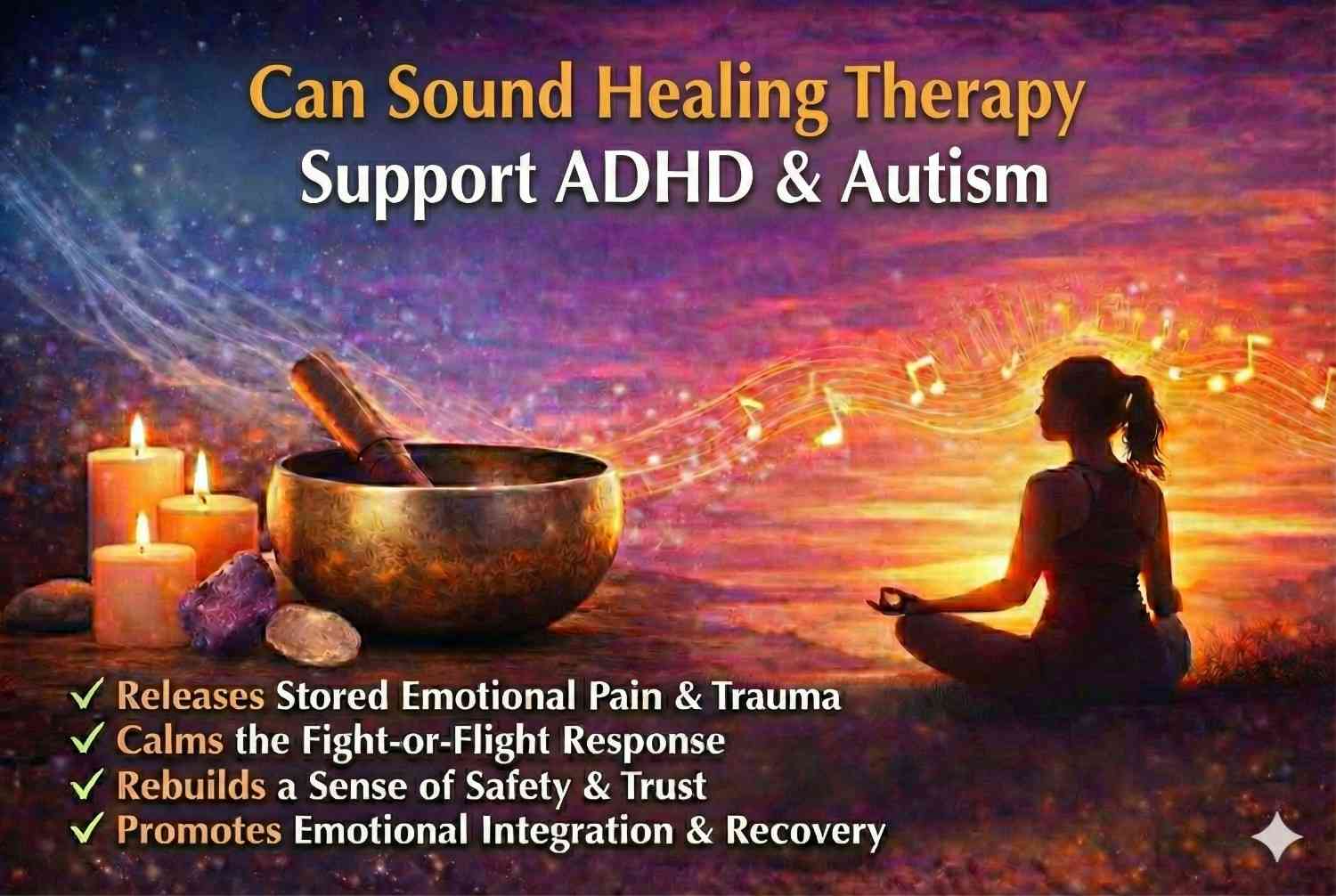
A Complementary Approach for Focus, Emotional Regulation & Sensory Balance
Neurodevelopmental conditions like Attention deficit hyperactivity disorder (ADHD) and Autism spectrum disorder (ASD) affect millions of children and adults worldwide.
These conditions are not illnesses to be “cured.” They are neurological differences that influence:
-
Attention & focus
-
Sensory processing
-
Emotional regulation
-
Social interaction
-
Executive functioning
Many families explore complementary wellness approaches alongside therapy and medical support. One emerging supportive practice is Sound Healing.
⚠ Important: Sound healing does NOT cure ADHD or autism. It may support relaxation, focus, and nervous system balance when used appropriately.
Understanding ADHD & Autism
ADHD (Attention Deficit Hyperactivity Disorder)
ADHD may include:
-
Inattention
-
Hyperactivity
-
Impulsivity
-
Difficulty completing tasks
-
Emotional reactivity
It is linked to dopamine regulation and executive function differences.
Autism Spectrum Disorder (ASD)
Autism involves:
-
Sensory sensitivity
-
Social communication differences
-
Repetitive behaviors
-
Strong focus on specific interests
-
Emotional regulation challenges
Every individual with autism is unique.
How Sound Healing May Offer Support
1️⃣ Nervous System Regulation
Children and adults with ADHD or autism often experience nervous system dysregulation.
Gentle sound frequencies may:
✔ Reduce sensory overload
✔ Promote calm breathing
✔ Lower stress response
✔ Create predictable auditory comfort
When the nervous system is regulated, focus and emotional control may improve.
2️⃣ Brainwave Entrainment & Focus Support
Brainwave patterns influence attention.
-
Beta waves = alertness
-
Alpha waves = calm focus
-
Theta waves = creativity
Soft rhythmic sound may help encourage Alpha states, which are associated with improved attention and calm concentration.
This may be particularly helpful for individuals with ADHD who struggle with overstimulation.
3️⃣ Sensory Integration Support
For individuals with autism, sound sensitivity is common.
However, controlled and predictable sound environments may:
-
Improve tolerance to sensory input
-
Support emotional stability
-
Provide grounding
-
Reduce anxiety
Sessions must always be gentle and personalized.
Instruments Commonly Used
Soft, harmonic instruments like Tibetan Singing Bowls are sometimes used in relaxation-based sessions.
These produce steady tones that can:
-
Encourage slow breathing
-
Reduce agitation
-
Promote relaxation
-
Support bedtime routines
Benefits of Supportive Sound Sessions
✔ Reduced anxiety
✔ Improved emotional regulation
✔ Better sleep patterns
✔ Increased relaxation
✔ Enhanced focus readiness
✔ Reduced hyperactivity (in some cases)
Results vary from person to person.
What Research Suggests
Studies on music therapy and rhythmic sound interventions show potential benefits in:
-
Attention improvement
-
Emotional regulation
-
Reduced anxiety
-
Behavioral stability
While sound healing research specific to ADHD and autism is still evolving, music-based therapies are widely explored in integrative approaches.
Sound healing therapy is a complementary wellness practice and does not replace medical diagnosis, therapy, or prescribed treatment for ADHD or autism.
Final Thoughts
Conditions like Attention deficit hyperactivity disorder and Autism spectrum disorder are lifelong neurological differences.
Sound Healing may serve as a gentle supportive practice for relaxation, focus, and emotional balance — when used responsibly and ethically.
Want To Connect With Expert Call Now On - 8700559091 or 9210080271