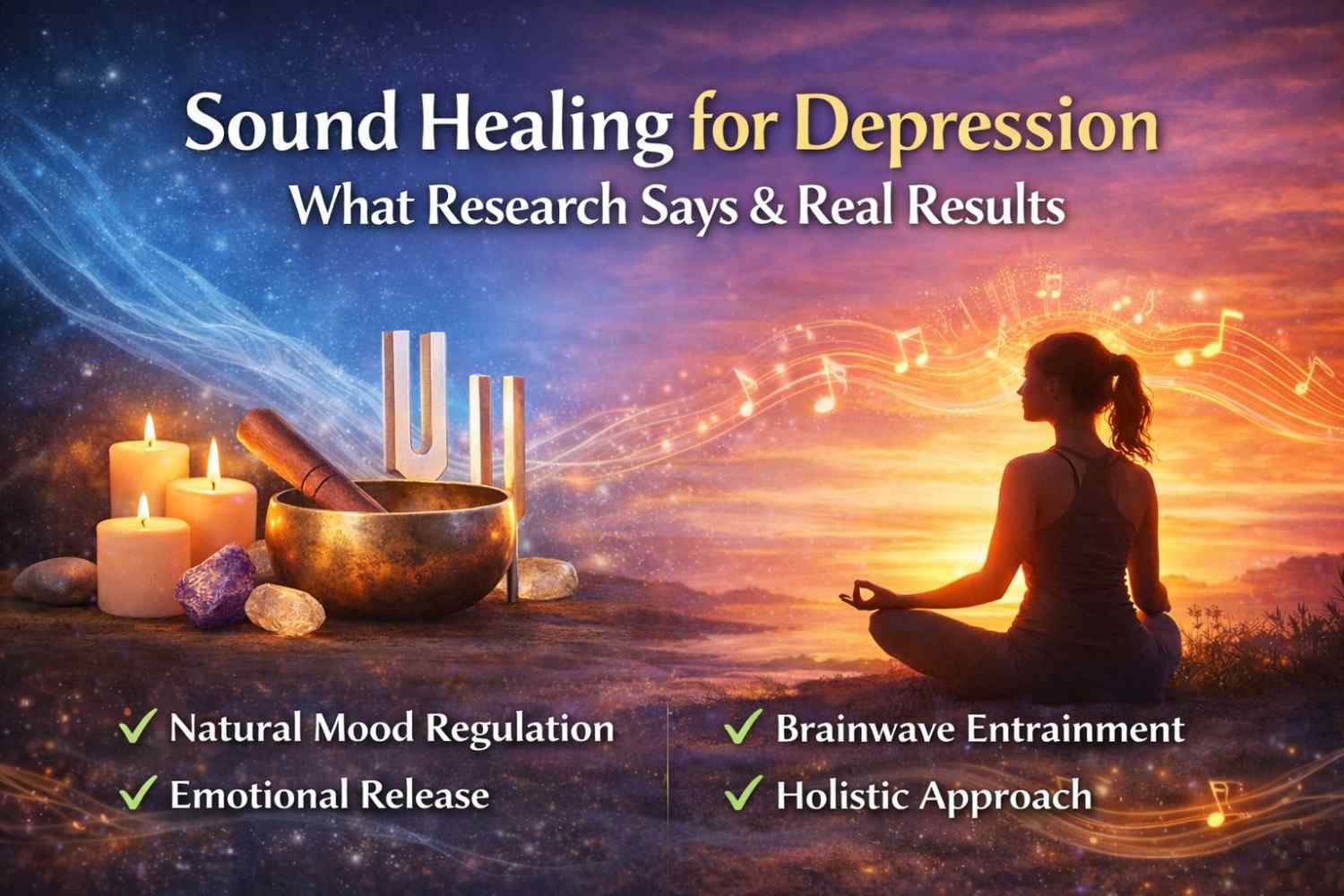
Natural Approaches to Mood Regulation & Emotional Release
Depression is more than sadness. It can feel like emotional heaviness, low motivation, fatigue, sleep disruption, and a loss of connection with life. While therapy and medication help many people, there is growing interest in natural approaches to mood regulation — including sound healing therapy.
In this in-depth, we explore what research says about sound healing for depression, how it supports emotional release, and what real results people experience.
What Is Sound Healing Therapy?
Sound healing therapy uses therapeutic frequencies, vibrations, and rhythmic tones to influence the brain, nervous system, and emotional state.
Common methods include:
-
Singing bowls
-
Gongs
-
Tuning forks
-
Binaural beats
-
Guided sound meditation
-
Mantra chanting
Sound is not just something we hear — it is vibration. These vibrations interact directly with our nervous system and brainwave activity, influencing mood and emotional balance.
What Research Says About Sound Healing & Depression
While sound healing is rooted in ancient traditions, modern science is now studying its impact on mood disorders.
Research referenced by institutions like the National Institutes of Health explores how mind-body therapies affect depression and emotional health.
A study published in the Journal of Evidence-Based Integrative Medicine reported that participants in sound meditation sessions experienced:
-
Reduced tension
-
Lower anxiety
-
Improved mood
-
Decreased anger
-
Enhanced emotional clarity
Music-based interventions are also recognized in clinical psychology for reducing depressive symptoms by regulating emotional processing pathways in the brain.
While sound healing is not a replacement for medical treatment in severe depression, research suggests it can be a powerful complementary therapy.
How Sound Healing Helps Regulate Mood Naturally
1. Brainwave Entrainment & Emotional Stability
Depression is often associated with dysregulated brainwave patterns.
Sound therapy encourages the brain to shift into:
-
Alpha waves (relaxed focus)
-
Theta waves (deep emotional processing)
This process, called brainwave entrainment, promotes calmness and emotional integration.
When brain activity becomes more balanced, mood regulation improves naturally.
2. Nervous System Reset
Chronic stress contributes to depressive symptoms by keeping the body in a survival state.
Sound healing activates the parasympathetic nervous system (rest-and-heal mode), helping:
-
Reduce stress hormones
-
Improve sleep
-
Lower inflammation
-
Restore emotional resilience
A calmer nervous system supports better mood stability.
3. Emotional Release Through Vibrational Therapy
Unprocessed emotions can create internal heaviness — a common experience in depression.
Vibrational sound therapy helps:
✔ Release suppressed emotions
✔ Reduce emotional numbness
✔ Improve self-awareness
✔ Encourage emotional expression
Many people report feeling lighter or more emotionally open after sessions.
4. Supports Hormonal Balance
Mood is closely connected to hormones like:
-
Cortisol (stress hormone)
-
Serotonin (happiness hormone)
-
Dopamine (motivation & reward)
Deep relaxation states induced by sound therapy may positively influence hormonal balance, contributing to improved emotional well-being.
Real Results: What People Experience
Clients who incorporate sound healing into their mental wellness routine often report:
-
Reduced emotional heaviness
-
Improved sleep quality
-
Increased energy
-
Better emotional control
-
Reduced negative thought loops
-
A deeper sense of inner peace
Results vary depending on consistency, individual health, and severity of symptoms.
Who Can Benefit From Sound Healing for Depression?
Sound healing may be beneficial for:
-
Mild to moderate depression
-
Emotional burnout
-
Seasonal mood changes
-
Post-stress emotional exhaustion
-
Individuals seeking natural mood support
⚠️ Important: For severe depression or suicidal thoughts, professional medical support is essential. Sound healing should be used as a complementary therapy, not a replacement for clinical care.
How Often Should Sessions Be Taken?
For emotional balance and mood support:
-
Mild symptoms → 1 session per week
-
Moderate symptoms → 2 sessions per week
-
Long-term emotional healing → Ongoing structured plan
Consistency enhances results.
Why Sound Healing Is Trending for Mental Wellness
People today are searching for:
-
Natural depression remedies
-
Holistic mood therapy
-
Drug-free emotional healing
-
Nervous system regulation techniques
Sound healing addresses both the neurological and emotional roots of imbalance — which is why it’s gaining attention worldwide.
Final Thoughts
Depression is complex and deeply personal. While traditional therapy and medication remain essential tools, complementary practices like sound healing offer additional pathways to healing.
Through:
-
Brainwave entrainment
-
Nervous system reset
-
Emotional release
-
Hormonal regulation
Sound healing supports natural mood balance and emotional resilience.
Healing is not about suppressing emotions — it’s about safely processing and releasing them.
Want To Connect With Expert Call Now On - 8700559091 or 9210080271